VLM 解析非结构化图像:一个极简可扩展方案
这篇文章展示一种非常直接的做法:用 VLM(Visual Language Models)解析图片中的非结构化信息。
它足够简单,但也保留了明确的扩展路径,比如继续支持 PDF、表格、视频帧等更复杂场景。
如果你想要一条更重型的工业化路线,可以看 LlamaParse 这类产品,它会叠加 OCR、表格解析等更多步骤。
我们先看一个常见场景:你有一批图片,需要抽取文字;或者你想给图片生成可检索描述,用于全文搜索。
这类事情,正适合交给 VLM。
我示例里用的是 llama_index,但核心思路和具体框架无关,迁移到你自己的客户端也很容易。
先上代码
第一步是定义一个明确的提示词,让模型知道输出结构和覆盖范围。
BASIC_PROMPT = """
        Please analyze this image comprehensively and provide the following information:

        1. General Overview:
           - Main subject matter and content
           - Overall composition and context
           - Key visual elements present

        2. Text Content:
           - Transcribe any visible text accurately
           - Include headers, labels, and captions
           - Note any important text formatting or emphasis

        3. Data Visualization (if present):
           - For tables:
             * Convert to markdown format
             * Preserve column headers and data relationships
           - For charts/graphs:
             * Describe the type of visualization
             * Explain key trends and patterns
             * List important data points and values
           - For diagrams/flowcharts:
             * Explain the structure and relationships
             * Describe the flow or process
             * Note any important symbols or annotations

        4. Additional Details:
           - Identify any branding or logos
           - Note color schemes if significant
           - Describe any relevant metadata or context

        Please format the response clearly and maintain the original structure of any data.
        """
接下来是一个最小可运行的图片解析器:
from pathlib import Path
from typing import List
import base64
from io import BytesIO
from PIL import Image
from llama_index.core.multi_modal_llms import MultiModalLLM
from llama_index.core.multi_modal_llms.generic_utils import ImageDocument
class SimpleImageParser:
def __init__(self, model: MultiModalLLM):
self.model = model
self.prompt = BASIC_PROMPT
def process_image(self, image_path: str) -> str:
image = Image.open(image_path)
buffered = BytesIO()
image.save(buffered, format="PNG")
return base64.b64encode(buffered.getvalue()).decode("utf-8")
async def parse(self, image_path: str) -> str:
image_data = self.process_image(image_path)
image_doc = ImageDocument(
image_url=f"data:image/jpeg;base64,{image_data}"
)
response = await self.model.acomplete(
prompt=self.prompt,
image_documents=[image_doc]
)
return str(response)
核心只有两步:
- 把图片转成 base64。
- 作为
image_documents 传给 VLM。
跑一圈
下面是如何使用这个解析器:
import asyncio
import os
import argparse
from pathlib import Path
from llama_index.multi_modal_llms.openai import OpenAIMultiModal
from dotenv import load_dotenv
load_dotenv()
async def main():
parser = argparse.ArgumentParser(description="Parse image content")
parser.add_argument("image_path", type=str, help="Path to the image file")
args = parser.parse_args()
image_path = Path(args.image_path)
if not image_path.exists():
print(f"Image file does not exist: {image_path}")
return
model = OpenAIMultiModal(
model=os.getenv("MULTI_MODAL_LLM_MODEL", "gpt-4o-mini"),
api_key=os.getenv("MULTI_MODAL_LLM_API_KEY"),
api_base=os.getenv("MULTI_MODAL_LLM_API_BASE", "https://api.openai.com/v1"),
max_new_tokens=int(os.getenv("MULTI_MODAL_LLM_MAX_TOKENS", "512")),
temperature=float(os.getenv("MULTI_MODAL_LLM_TEMPERATURE", "0.7")),
verbose=os.getenv("MULTI_MODAL_LLM_VERBOSE", "False").lower() == "true",
)
parser = SimpleImageParser(model)
result = await parser.parse(str(image_path))
print(result)
if __name__ == "__main__":
asyncio.run(main())
这段代码会初始化 VLM,创建解析器,然后输出解析结果。
运行 Demo
完整示例代码在这里:
运行方式:
python basic.py <image_path>
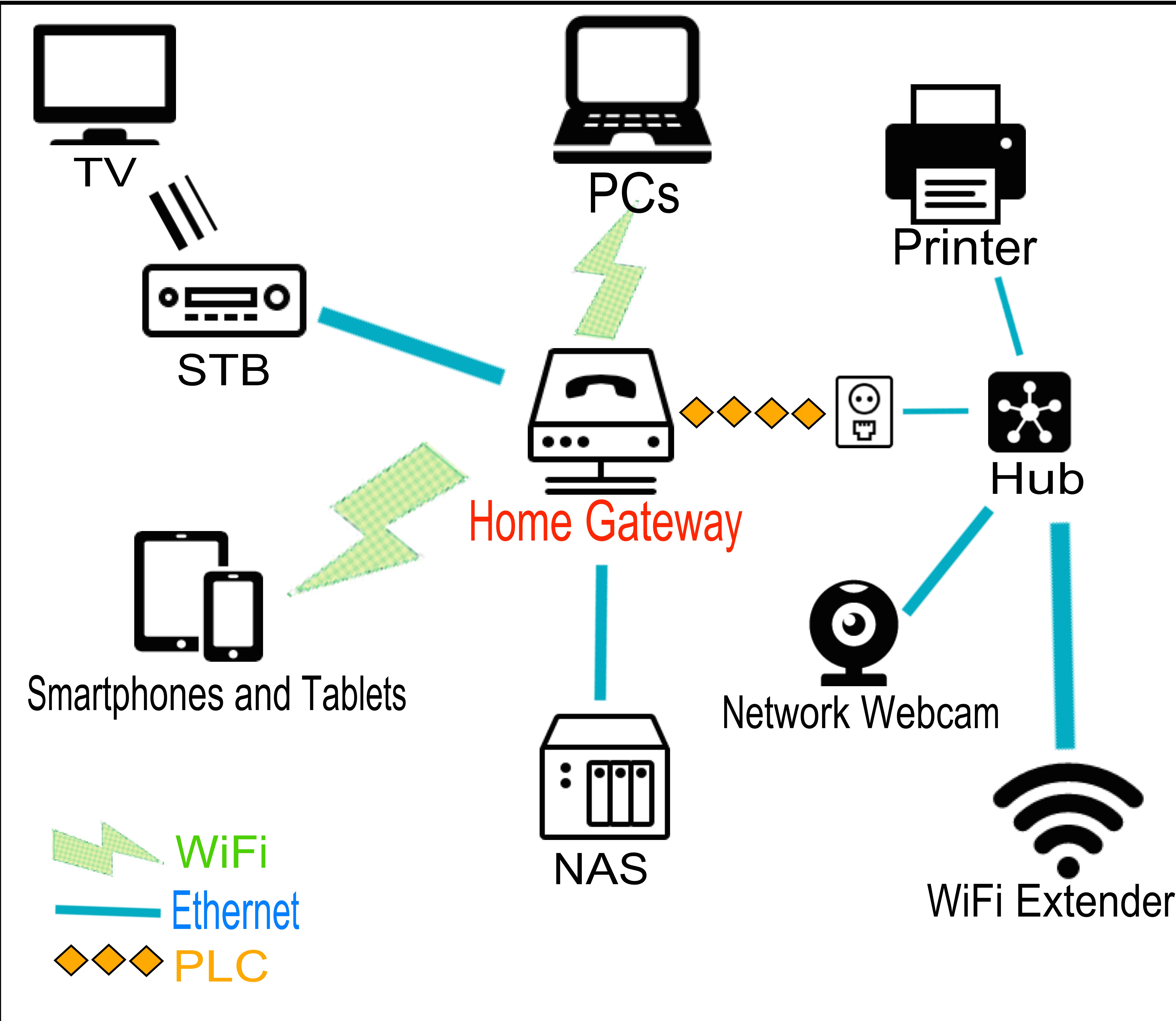
示例图片是一张家庭网关界面截图(来源:Home gateway example):
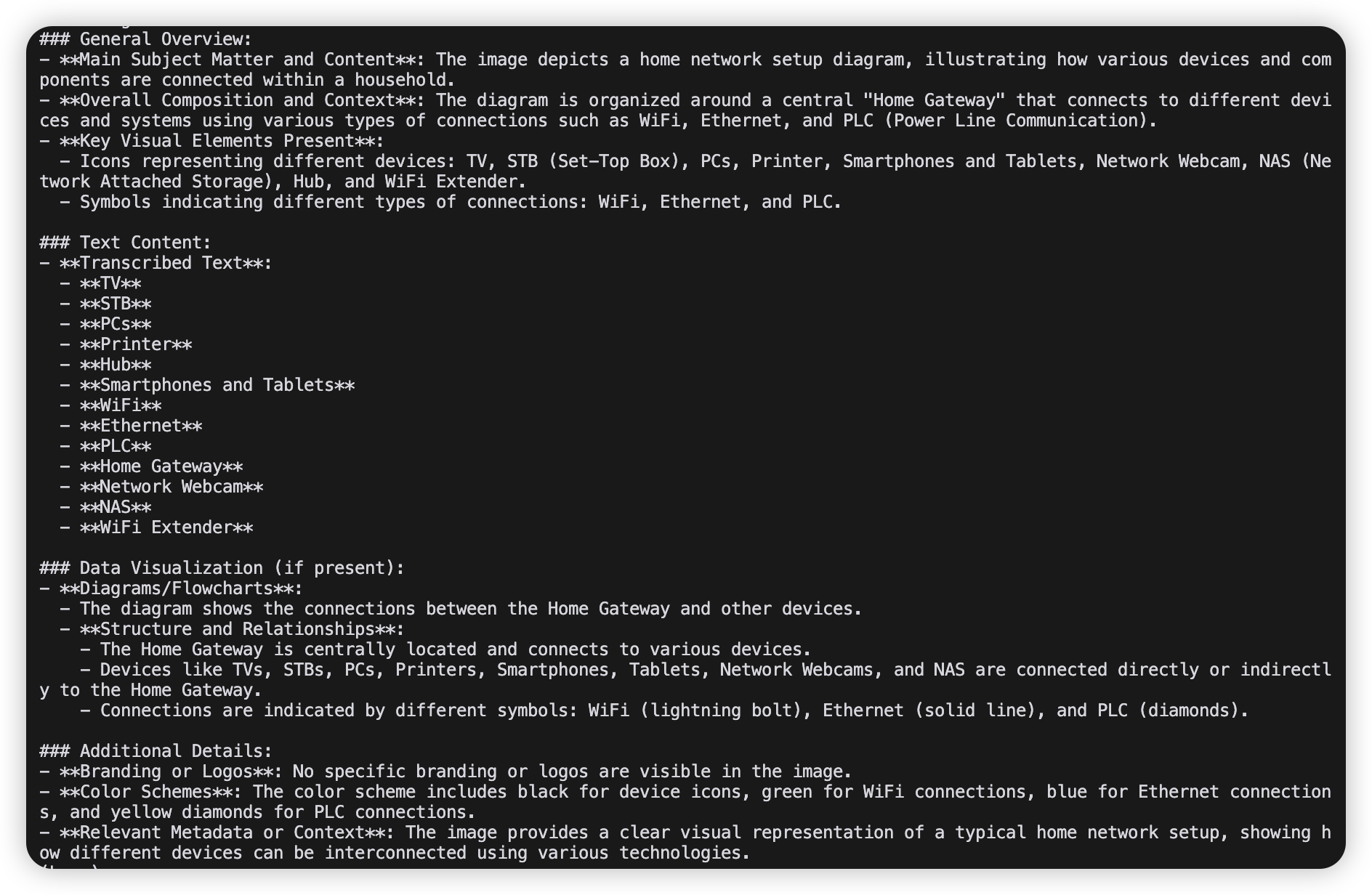
终端中的解析输出示例:
Bonus:如何扩展这个 Parser
下面是几个实用扩展方向:
- 格式支持
- 用
pdf2image 处理 PDF。
- 用
opencv-python 抽取视频帧后再解析。
- 输出形态
async def parse_to_json(self, image_path: str) -> dict:
result = await self.parse(image_path)
return json_result
- 用 Jinja2 等模板工具生成更稳定的结构化文本。
- 处理流水线
- 接入 Tesseract OCR 做文字前处理。
- 追加表格解析能力。
- 用 asyncio 做批处理。
- 系统集成
- 接入 llama-index 做 RAG。
- 进一步封装成自动化工作流。
Resources
如果你只想快速验证“VLM 解析图片”是否有业务价值,这个极简方案足够开始。
先跑通最小闭环,再决定是否引入 OCR、表格结构化和更复杂的工程管线。
